Diode Laser Hair Removal ROI: Real Numbers from NZ Clinics
Should we add laser hair removal? Will it actually pay for itself? Here’s what the numbers really look like.
Summary
Most NZ clinic owners considering laser hair removal equipment ask the same question: “What’s the real return on investment?” This article breaks down the actual costs, revenue potential, and break-even timeline based on typical clinic scenarios. If you’re deciding whether to invest in diode laser equipment, you need to see these numbers first.
The Reality Check
Diode laser hair removal isn’t a secret money-maker, but for clinics that position it correctly, it’s a reliable revenue stream with a clear path to profitability.
Here’s what we see:
- Clinic owners often overestimate revenue potential (thinking every client wants laser)
- They underestimate the time investment needed to build demand
- But clinics that launch strategically see break-even within 12-18 months and consistent profit thereafter
Let’s work through actual numbers instead of marketing hype.
Part 1: The Cost Side (What You Actually Spend)
Equipment Investment
Option A: Equipment Purchase (Diode Laser System)
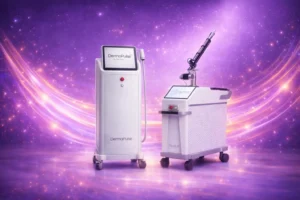
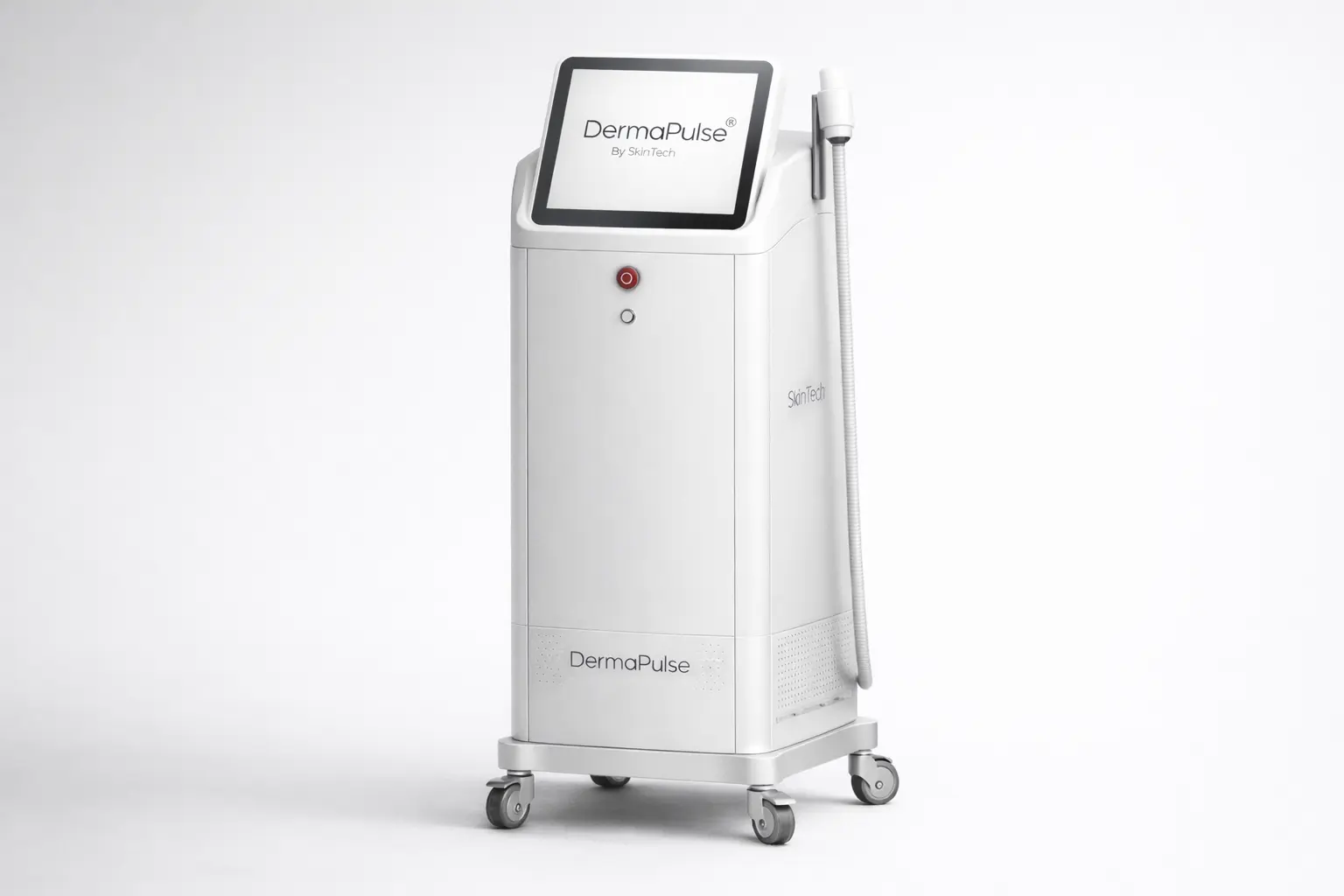
- Typical system cost: $60,000 – $100,000 NZD (DermaPulse™ or similar)
- Installation/setup: $2,000 – $5,000
- Training (staff): $3,000 – $7,000
- Consumables (first year): $5,000 – $8,000 (handpieces, cooling systems, supplies)
Total upfront investment: $70,000 – $120,000
Option B: Equipment Lease/Rent (More Common for Startups)
- Monthly lease: $1,200 – $2,000 NZD/month
- Training included: Usually covered by supplier
- Consumables: Often included in package
- Flexibility: Upgrade or exit with 30-90 days notice
Annual cost: $14,400 – $24,000 (or ~$1,200-$2,000/month)
Our perspective: Most successful new clinics in NZ lease first, buy later. Why? Leasing lets you test demand without the $100k+ capital risk. If laser hair removal thrives, you can buy. If it underperforms, you exit without losing your investment.
Ongoing Operating Costs (Per Year)
- Consumables & maintenance: $5,000 – $8,000/year (handpieces, cooling gel, filters)
- Staff training/certification: $2,000 – $3,000/year (ongoing education, compliance)
- Marketing (initial launch): $3,000 – $5,000 (to build awareness and patient flow)
- Facility upgrades (if needed): One-time $2,000 – $10,000 (dedicated space, electrical, plumbing for cooling)
Annual ongoing cost: $10,000 – $16,000 (excluding facility upgrades, which are one-time)
Part 2: The Revenue Side (What You Actually Earn)
Price Per Treatment (NZ Market Benchmarks)
Laser hair removal pricing varies by treatment area. Here are typical NZ clinic prices:
| Area | Cost Per Session | Sessions Needed | Total Cost |
|---|---|---|---|
| Small (underarms, bikini) | $80 – $150 | 6-8 | $480 – $1,200 |
| Medium (legs, back, chest) | $150 – $350 | 6-8 | $900 – $2,800 |
| Large (full body) | $400 – $700 | 6-8 | $2,400 – $5,600 |
| Face | $100 – $200 | 6-8 | $600 – $1,600 |
Average per client: $1,200 – $2,500 total spend (across 6-8 sessions over 12-18 months)
Per-session average: ~$200 per client session (across all treatment areas)
Treatment Capacity & Booking
Realistic clinic capacity:
- Sessions per week: 15-25 (assuming 30-60 min sessions, one laser, normal clinic hours)
- Sessions per month: 60-100
- Sessions per year: 720-1,200
Realistic booking rates (this is critical):
- Month 1-3: 20-30% capacity (30-40 sessions/month) — word-of-mouth ramping up
- Month 4-12: 50-70% capacity (50-70 sessions/month) — steady referrals
- Year 2+: 70-85% capacity (70-100 sessions/month) — established service
Why not 100% booked immediately? Clinic owners always underestimate the time needed to build demand. Laser hair removal requires patient education, word-of-mouth, and marketing investment. It doesn’t fill overnight.
Revenue Projections (Conservative Model)
Scenario: Mid-sized NZ clinic adding laser hair removal
Year 1:
- Months 1-3: 35 sessions/month × $200 = $7,000/month = $21,000 (Q1)
- Months 4-12: 60 sessions/month × $200 = $12,000/month = $108,000 (Q2-Q4)
- Year 1 Revenue: ~$129,000
Year 2: (Assuming 75% steady-state capacity)
- 85 sessions/month × $200 = $17,000/month
- Year 2 Revenue: ~$204,000
Year 3+: (Mature capacity)
- 100 sessions/month × $200 = $20,000/month
- Year 3+ Revenue: ~$240,000/year
Part 3: The Break-Even Analysis
Buy Model (Equipment Purchase)
| Year | Revenue | Operating Costs | Equipment Depreciation | Net Profit | Cumulative |
|---|---|---|---|---|---|
| Year 1 | $129,000 | -$13,000 | -$15,000 | $101,000 | $101,000 |
| Year 2 | $204,000 | -$13,000 | -$15,000 | $176,000 | $277,000 |
| Year 3 | $240,000 | -$14,000 | -$15,000 | $211,000 | $488,000 |
Break-even: 6-9 months (if purchased equipment)
Lease Model (Equipment Lease)
| Year | Revenue | Lease Cost | Operating Costs | Net Profit | Cumulative |
|---|---|---|---|---|---|
| Year 1 | $129,000 | -$18,000 | -$10,000 | $101,000 | $101,000 |
| Year 2 | $204,000 | -$18,000 | -$10,000 | $176,000 | $277,000 |
| Year 3 | $240,000 | -$18,000 | -$10,000 | $212,000 | $489,000 |
Break-even: 3-4 months (if leasing equipment)
Key takeaway: Whether you buy or lease, diode laser hair removal breaks even and turns profitable in your first year. The lease model breaks even faster (less capital risk), while the buy model has lower long-term costs.
Part 4: What Actually Affects Your ROI (The Real Variables)
Variable 1: Client Retention & Repeat Treatment
The numbers above assume realistic clinic rebooking.
What kills profitability:
- Poor results → clients don’t return
- No aftercare guidance → complications → bad reviews
- Competitors poaching clients
What builds profitability:
- Clear results (diode lasers deliver, so this is usually not the problem)
- Client education (set realistic expectations, explain the 6-8 session timeline)
- Staff expertise (proper technique = better results = repeat clients = word-of-mouth growth)
Impact: A clinic with 80% client retention vs. 50% retention sees 40% higher annual revenue from the same equipment.
Variable 2: Marketing Investment
Clinics underestimate how much marketing it takes to fill a new service.
Realistic scenario:
- Months 1-3: Spend $1,000-$2,000 on Google Ads, Instagram, local targeting to build initial client base
- Months 4-12: Reduce to $300-$500/month (word-of-mouth takes over)
- Year 2+: Minimal spend (service is established)
Impact: Clinics that invest $5,000 in Year 1 marketing reach profitability in month 5-6. Clinics that skip marketing reach it in month 12-14.
Variable 3: Pricing & Service Positioning
Two clinics can have wildly different ROI with the same equipment.
Low-price clinic: $120/session
- Higher volume needed to break even
- More casual client base (tourists, one-off treatments)
- Lower total client lifetime value
Premium clinic: $250/session (positioning as “medical-grade”, “expert staff”, “best results”)
- Lower volume needed to break even
- Professional clientele willing to pay for quality
- Higher total client lifetime value
Impact: A $100 price difference per session = $50,000 – $100,000 annual revenue difference.
Part 5: Real Clinic Scenario Comparisons
Scenario A: Startup Clinic (Leasing Equipment)
Clinic profile:
- New clinic, no existing laser clients
- $1,500/month lease (typical)
- Moderate marketing budget ($500/month)
- Medium pricing ($200 per session)
Year 1 financials:
- Revenue: $129,000
- Lease: -$18,000
- Operating costs: -$10,000
- Marketing: -$6,000
- Net profit: $95,000
- Profitability month: Month 4
- ROI in Year 1: 168% (before equipment purchase consideration)
Decision: Leasing is the right play. Test demand risk-free. If successful, buy in Year 2 or 3.
Scenario B: Established Clinic (Buying Equipment)
Clinic profile:
- Established clinic, existing patient base
- $85,000 equipment purchase
- Minimal marketing (existing patients know about new service)
- Premium pricing ($250 per session)
Year 1 financials:
- Revenue: $150,000 (higher because of existing client base)
- Equipment depreciation: -$17,000
- Operating costs: -$13,000
- Minimal marketing: -$1,000
- Net profit: $119,000
- Break-even month: Month 7
- ROI in Year 1: 117% (after equipment depreciation)
Decision: Buy if you have capital and existing demand signals. You’ll recover your investment faster than a startup.
Scenario C: Conservative Clinic (Lower Booking Rate)
Clinic profile:
- Clinic grows slower than projected
- 50% booking capacity (not 70%+)
- $1,500/month lease
- Standard pricing ($200 per session)
Year 1 financials:
- Revenue: $86,000 (50 sessions/month after ramp-up)
- Lease: -$18,000
- Operating costs: -$10,000
- Marketing: -$6,000
- Net profit: $52,000
- Break-even month: Month 7-8 (takes longer, but still profitable in Year 1)
Decision: Even in a conservative scenario, you’re profitable. Just takes longer to see the upside.
Part 6: Beyond Year 1 — The Real Upside
Here’s what most clinic owners miss: Year 2+ is where the real money is.
Why?
- No ramp-up phase — You’re at steady-state capacity from day 1 of Year 2
- No learning curve — Staff are trained, systems are optimized
- Word-of-mouth is strong — By Year 2, most new clients come from referrals (low marketing cost)
- Client loyalty compounds — Clients return for maintenance treatments (annual sessions), referrals, and upsells to other services
Realistic Year 2+ Projections:
Buy model (after initial $85k investment):
- Revenue: $240,000/year
- Operating costs: -$14,000/year
- Net annual profit: $226,000/year (ongoing)
That’s a 265% ROI on your equipment investment by Year 3.
Lease model:
- Revenue: $240,000/year
- Lease cost: -$18,000/year
- Operating costs: -$10,000/year
- Net annual profit: $212,000/year (ongoing)
Either way, diode laser hair removal becomes one of your highest-margin services.
Part 7: When ROI Gets Better (Or Worse)
ROI Gets BETTER If:
- ✅ You upsell other services (skin rejuvenation, tattoo removal) to laser clients
- ✅ You partner with local practitioners (dermatologists, beauty therapists) for referrals
- ✅ You position yourself as the local “laser hair removal specialist”
- ✅ You add complementary services (post-laser skincare products)
- ✅ You reach higher capacity (85%+ bookings vs. 70%)
Potential upside: 20-40% higher annual revenue
ROI Gets WORSE If:
- ❌ You ignore marketing in Year 1 (expect 12-18 month break-even instead of 6-9 months)
- ❌ You have poor results (untrained staff, wrong equipment settings)
- ❌ You price too low ($100-120/session), forcing high volume for same profit
- ❌ You compete purely on price (race to the bottom)
- ❌ You don’t invest in staff training/certification
Potential downside: 20-40% lower annual revenue or extended break-even timeline
Part 8: Lease vs. Buy Decision Framework
Choose LEASING If:
- You’re a startup or new to laser services
- You want to test demand without capital risk
- You prefer flexibility (upgrade equipment every 2-3 years)
- You want ongoing support/maintenance included
- Your annual ROI is highest in Year 1-2 (more important than long-term ownership)
Choose BUYING If:
- You have capital available ($80k-$120k)
- You already have demand signals (existing clients want laser)
- You plan to operate the clinic for 5+ years
- You want maximum long-term profit (lower per-year costs)
- You’re comfortable with equipment maintenance and upgrades
The smart play for most NZ clinics: Lease for Year 1 (prove demand, zero risk). Buy in Year 2 when you have cash flow to support it.
Part 9: Common Clinic Owner Mistakes (That Kill ROI)
Mistake 1: Underestimating the Sales Cycle
“We’ll add laser hair removal and clients will book it.”
Reality: Patients need education, word-of-mouth takes 3-4 months to build, and you need active marketing.
Fix: Budget for marketing in months 1-3. Don’t expect passive bookings.
Mistake 2: Poor Staff Training
“Our esthetician can figure it out with the manual.”
Reality: Poorly trained staff deliver mediocre results, clients don’t return, word-of-mouth turns negative.
Fix: Invest $5,000-$10,000 in proper training. Certified staff = better results = repeat clients.
Mistake 3: Pricing Too Low
“We’ll charge $100/session to undercut competitors.”
Reality: You’re racing to the bottom. Even at 100 sessions/month, you’re not making enough to justify the equipment.
Fix: Position yourself on value, not price. Charge $180-$250. You’ll lose some clients but make more money overall.
Mistake 4: Ignoring Client Aftercare
“We do the treatment, they’re done.”
Reality: Poor aftercare = complications → bad reviews → fewer referrals.
Fix: Provide clear pre/post treatment guidance, recommend sunscreen, follow up with clients.
Mistake 5: Not Tracking Data
“We’re making money, so it’s working.”
Reality: You don’t know which clients are profitable, which marketing channels work, or where to optimize.
Fix: Track sessions booked, revenue per client, cost per acquisition, client retention rate. Use data to improve.
The Bottom Line
Diode laser hair removal is a solid investment for NZ clinics that:
- Lease first (to test demand risk-free)
- Invest in staff training and marketing
- Price strategically (not at the bottom)
- Focus on client results and retention
- Track performance and optimize
Expected ROI:
- Lease model: Break-even in 3-4 months, $100k+ profit Year 1
- Buy model: Break-even in 6-9 months, $100k+ profit Year 1
- Long-term (Year 3+): $200k-$250k annual profit (one of your highest-margin services)
The risk? Almost none if you lease. Clinic owners who underestimate the sales cycle or skip staff training extend their break-even timeline, but even conservative clinics hit profitability within 12 months.
The opportunity? Diode laser hair removal is one of the easiest ways to diversify clinic revenue and create recurring client relationships (patients return for maintenance treatments annually).
Ready to Explore Equipment Options?
If these numbers make sense for your clinic, the next step is understanding which equipment is right for you: diode vs. picosecond, lease vs. buy, training requirements, and support.
SkinTech specializes in diode laser equipment for NZ clinics. We provide:
- Equipment leasing with flexible terms
- Comprehensive staff training and certification
- Ongoing technical support
- Marketing resources to help you fill the chair
Request a personalized ROI analysis → We’ll model the numbers specific to your clinic, patient base, and goals.